Pattern Pulp

Artist Profile: Christopher Cascio


When you click on Christopher Cascio’s website, you’re met with quite literally a Clusterfuck. It’s a statement reflective of his humor, his insight and the way he incorporates pop culture into art.

Cascio’s other work is also repetitive in nature, technically intricate and infused with messaging reminiscent of his thought process. The musically minded, bold and graphic palettes are all-encompassing and invite the viewer to stay a while to explore a maze of visual commentary.

Cascio’s work is currently on display at New Image Art in the collective show entitled, 3 Cowboys, 2 Drugs and a Skater. The other participating artists are, Bryson Brooks & Holly Hein, Mark Cross, Panda Sex and Chad Muska. Click here for more info.


Gifts for You Design Minded Folks


Since the season’s in full swing, I’m assuming most of you are already crossing gifts off your lists- particularly if you celebrated Chanukah. With pop up shops on every downtown corner, I figured I’d jump in and offer my two cents. I might continue adding more to the mix, but to kick off, here we go:

*            *            *

1. Fold, Unfold, Tablecloth by Hay & Margrethe Odgaard, $160
2. Patterned Paint Roller, The Patterned House, $15 GBP
3. Sitting Bull Pixel Bean Bag, $313
4. Little Bits Holiday Kit, $49
5. Green & Gray 15″ MacBookPro Laptop Bag, $49.95
6. Revenge of the Nerds Onesie, $18
7. The Napsack by The Poler, $130
8. Blueprint Paper Placemats, $26.50
9. Detachable Conductive Smartphone Friendly Glove Pins, $11.99

Set Design using Cymatic Patterns


Here’s an example of life imitating art and vice versa, compliments of Meara O’Reilly. O’Reilly created these designs as a multimedia backdrop for Björk’s Biophilia world tour. By day, Meara works as a sound artist and educator, in residence at the Exploratorium in San Francisco. This is just one of many projects where she uses cymatic effects to reflect the texture in sound through vibration in matter.


Visualizing Wind Patterns


This lyrical short just landed in my inbox, care of the talented Nina Solomon. While it’s been circulating the web for a while, it’s worth sharing for those who haven’t seen it. Capturing the wind’s graceful sweeps, 612 free-rotating directional arrows dance under directional force. Created by Charles Sowers, installed by Rocket Science and commissioned by the San Francisco Arts Commission, I’m assuming it’s a sight to behold. Check it out if you’re in the Bay area.


Do Photo Restrictions Fuel Creativity?


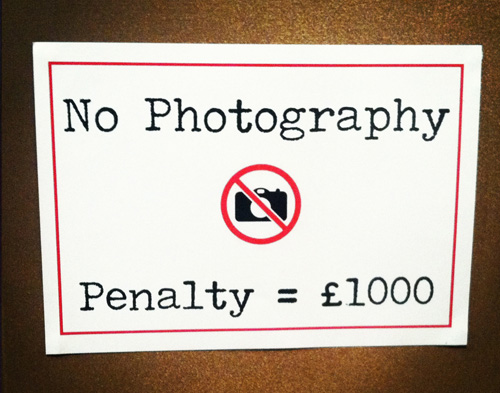
This sign felt like a dare. I had to snap it. Was it art? A threat? Both? It was hanging at the entrance of Selfridges’s holiday retail art and pop up shop last year. It’s relevant today, as it succinctly illustrates the ongoing battle between the creative world, it’s observers, inspiration, and the act of plagiarism.

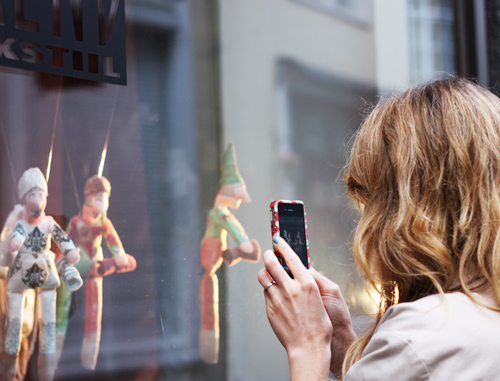
How many times have you ignored a ‘no photo’ sign? It almost feels like you’re getting a pass when you snap an ‘amateur’ photo with a smart phone, rather than a professional camera. There’s no doubt about it, the landscape of photography has shifted, with more photos being taken than ever before in 2011 alone. For the creative class – or for anyone who considers themselves to be strongly visual – having such easy access to instant-gratification feels essential.

It used to be that sketchpads and a set of Staedtlers were the primary tools in our toolkit. However, now that we all carry cameras, the photo almost feels like the lazy man’s approach to memory. We’re all guilty, who wouldn’t want an authentic image of the thing that caught our eye, un-meddled by memory or drawing skills?
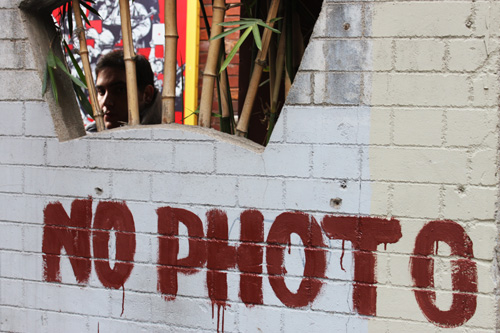
I shot this while in Shanghai last year. It almost seems a bit ironic, though the corredor of artists  were a refreshing bunch. So this leads me to ask, does the ease of smart phone photography fuel or hinder our creativity? Both perhaps? Does a photo intensify a memory or dilute the activity?

I don’t know about you, but I have some wonderfully lush memories and quickly drawn notes from events I had, at the time, desperately wished to photograph. For years, it broke my heart a little to not have pictures, but more recently I’ve realized that your imagination will never fail you and illustrating memories is a nice exercise for the brain.

As creatives, the issue almost seems a bit hypocritical.  While I don’t believe any of us would pass on the photographic progress we’ve made over the years, we’re more concerned than ever about credits and rights management of the work we’ve dedicated our lives to.  It’s no secret to anyone that social media that the lack of proper attribution, copyright infringement and outright theft has risen along with smart phone photography and the subsequent popularity of instagram, tumblr, Pinterest and the like. So, where do we draw the line? Would love to hear your thoughts.

Written by Shayna Kulik & Emily Gup

 

Lessons in Technology from Estonia


Sometimes our posts are a little monkey-see-monkey-do, but that’s the nature of a visual site: to provide bright, compelling content that’s thoughtful and relevant throughout the market. Today I’d like to return to my researcher roots and share a few thoughts on an article that I was particularly moved by.

This past weekend, Thomas Friedman wrote a piece for the New York Times entitled, New Rules, describing how schools in Estonia are adding coding to the elementary curriculum in the hopes of solving hiring problems for the future.

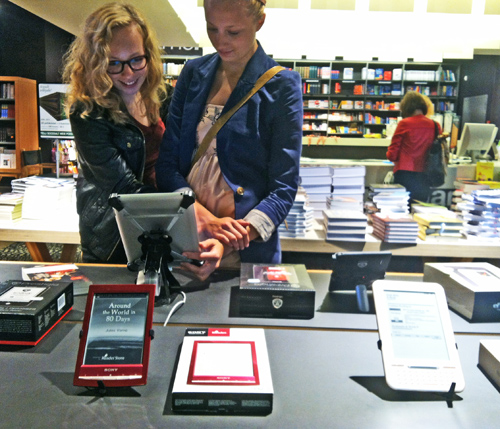
Having just returned from Tallinn (Estonia) I witnessed the technology boom first hand. It almost felt like San Francisco- save for the fact that I was on Russian/Scandinavian territory. Skype was developed there and many of the conversations at the cafes and restaurants I visited were tech related. Unsurprisingly Tallinn’s Foursquare tips were also abundant.

There’s free wifi on every other street (Paris could take a hint) and Facebook, Google, PriceWaterHouseCoopers and many other American businesses have engineering offices based in Estonia- it’s one of the coding and development capitals of Europe. So that brings me back to patterns. And the future. And the idea of staying relevant in today’s fast-changing world.

Friedman puts it best quoting futurist Alvin Toffler, “lliteracy will not be defined by those who cannot read and write, but by those who cannot learn and relearn. Any form of standing still is deadly.”

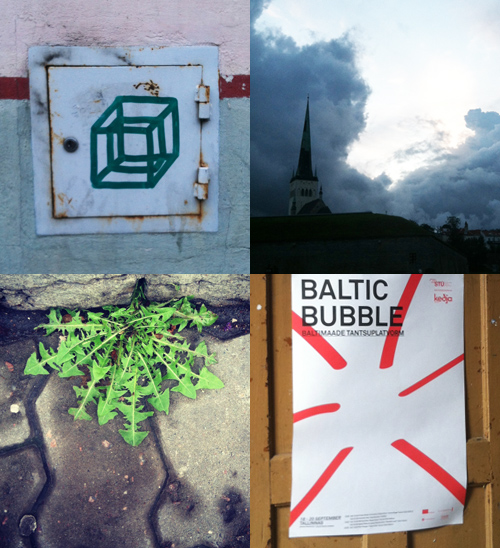
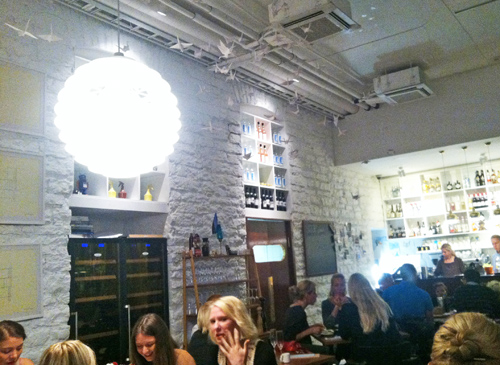
Here are a few photos from my time in Tallinn. I thought it would be nice to share a taste of the creative culture. So what are your thoughts on the matter? Do you ever think about the evolution of your industry, where it’s going and how you’re going to stay relevant? 


Tracking Repetitive + Awesome.
On Instagram.