Pattern Pulp

Helen Dealtry's World of Textiles


2helen_dealtry1ahelen_dealtry3helen_dealtry4helen_dealtry5ahelen_dealtry

Living in New York has benefits beyond the obvious. The longer you’re here, the closer you become to the overlapping communities around you. One friend introduces you to the next, and before you know it, you’re discovering talent, discussing relationships, job opportunities, tailors, dentists, apartments, and even encouraging group runs for the next half marathon. Everyday’s different, it’s fun.

Two weeks ago, I went to dinner at my friend Marissa’s new restaurant, Nourish Kitchen & Table (which is lovely, delicious and very healthy- I highly recommend). She teamed up with another friend, Kate Whitlow, for a Pumpkin cook off. Naturally, I was excited about this. While waiting in line to pay, I met Kate’s friend Amy. Before we knew it, we were introducing ourselves, eating pumpkin, drinking wine and talking life at the back table while waiting for our friends to arrive. Our conversation wove its way through music, textiles, women’s rights and the Somaly Mam Foundation’s upcoming gala, where Amy heads up partnerships and business development.

Through Amy, I discovered the talent that is Helen Dealtry. I learned about her studio, her patterns, and her latest venture into bedding. I bookmarked her site to delve into later that night and went home excited to have met someone great.

It only got better. Deltry’s seriously talented. Everything is beautiful, and her style is consistent and impressive through alternating genres. The patterns, scarves, and resulting work from her summer course at The Textile Arts Center is inspiring in a lyrical, organic kind of way. Have a look, you won’t be disappointed.

 

Textile Techniques: Insley & Nash


We’re so used to looking at streams of pretty pictures, that the process beyond the product is often an after thought. Places like 3rd WardKollabora and Skillshare, here in New York and Craftsy on the West Coast are attempting to democratize the DIY process, though there’s still a big step between producing craft and superior luxury product.

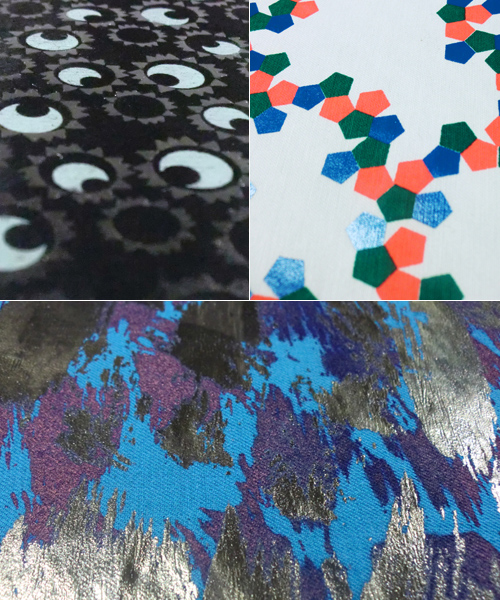
I recently came across Insley & Nash and was blown away by their fabrics. They’re a bespoke screen printing studio based out of London, specializing in the tough stuff: flocking, foil, devore and fluorescent pigments.

Gavin Insley and Mika Nash formed the studio with the hopes of providing an outlet to designers in need of short runs of high quality textile screen printing and dyeing. Have a look at their video, hopefully you’ll find it as calming and inspiring as we did.


Meet the Newest Member of the Team!


I’m super excited to introduce the newest member of the Pattern Pulp team. Kimberly Hall and I met at the design mecca of conferences, Alt, where we connected at Erin Loechner ‘s famed resource party.

Hall’s a master in textile design, receiving her MA from Central Saint Martins after receiving a BFA from the School of the Museum of Fine Arts in Boston. She’s also studied draping and millinery at FIT in New York. Currently a Senior Designer for Womenswear at Coach, Hall is best known for her baking, not cooking, drawing, not painting and French, not Spanish.

Her weekly PP column will focus on the inspiration process and the role it plays in design. From inspiration to execution, follow along as she shares her visual stories.


A Summation of Indigo PV with Arts Thread


Today’s feature is by our intrepid writer, Emily Gup.

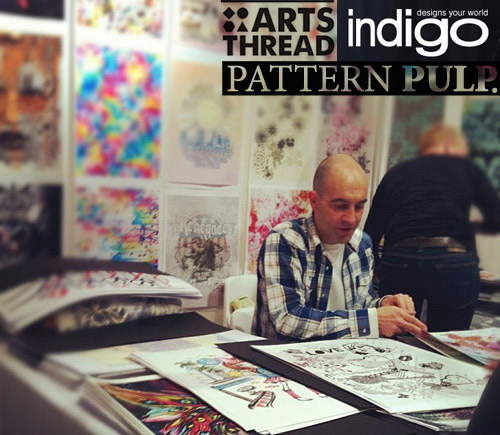
I was pretty jazzed when I learned that Pattern Pulp and Arts Thread would be teaming up to cover the Premiere Vision / Indigo New York SS13 textile show.  For those who are unaware, Arts Thread is an exciting platform based out of the UK for college students and graduates to post portfolio work and network with fellow grads and industry professionals.

Meeting up with Co-founder and Director Alex Brownless was a pleasure- we talked about the current work environment for recent grads and how exposure is integral in getting hired. The site is popular in the UK, Europe and Asia and is looking to expand into the US.

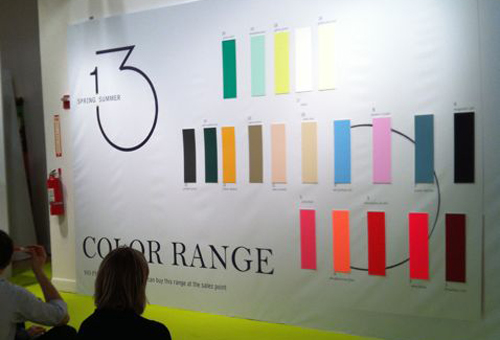
We also chatted about all-things textiles and viewed the five-level exhibition together. After weaving through each floor like kids in a candy store, it was evident that movement and transition were the strongest underlying themes throughout. Here are some supporting observations from the day.

Techniques:

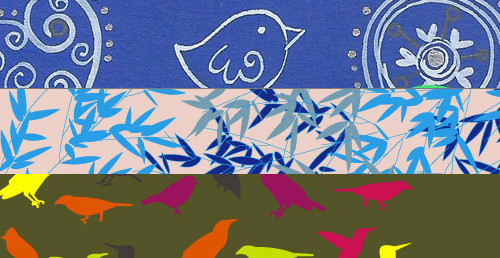
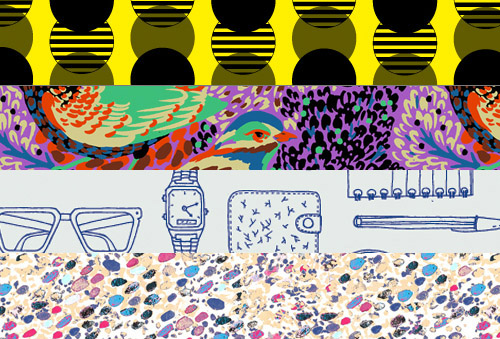
A range of hand-painted and hand-drawn designs incorporating luxurious splashes of color, loose detailed geometry and dense ethnic prints.

Digital Effects:

Photo-realism and free-form layering. Ethnic prints were manipulated so as to blur the line between popular pixilated themes and traditional ethnic patterns.

Large Scale:

Organic and freeform with lush movement. Smooth transitions with art-nouveau influences.

Coverage by Emily Gup


Global Pattern Trends with Lala's Pequenos


When’s the last time you dug a little deeper and thought twice about the purchases you make? Do you buy punchy colorful products or prefer soft, muted shades? Do you make impulse decisions online or in the store?

It’s a lot to think about when juggling a busy schedule, but we have to say we’re intrigued by various markets, both locally and abroad and today we’ll be sharing some fun facts that Alessandra, the creative force behind the children’s line, Lala’s Pequenos, has graciously shared with us about her global customers.

For example, Americans love gray, brown, pink, blue, and greens combined in any which way so long as there are animals for boys and flowers for girls.

Add a modern parent to the mix and there’s a good chance he or she will be buying geometric prints. If you’re wondering if organic’s an issue, Alessandra’s customers buy at a 50/50 rate in the US.

In the Canadian and Australian markets, parents prefer organic fabrics that are gray, brown, soft yellow and soft blue. Geometrics and aviary prints dominate (particularly owls)!

In the Mediterranean and Middle Eastern territories, kid-like designs in bold primary colors are at the top and buying organic isn’t necessarily a priority.

The French and Germans enjoy bolder browns, pinks, blues and orange. Geometric prints nearly always dominate and buying organic is at a 50/50 split.

Rounding out the global territories, Lala Pequenos’ Asian customers prefer soft colors and organic if possible. A nice refreshing fact that we’ll admit is a joy to hear.


Textile Design: Warp & Weft


The verdict is in!  Warp & Weft has announced the winners of the Contemporary Creations: A Rug Design Competition for upper division Textile/Surface Design Program students at the Fashion Institute of Technology.  The winning designs were selected from a group of 24 entries.

The results are so impressive and inspiring and a reminder of the creativity that’s brewing outside the commercial world. All the rugs in the Warp & Weft Modern Collection are made from the purest Himalayan wool and Indian mulberry silk. The wool and silk are unbleached to keep the materials as close to their original state as possible and to develop color vibrancy and depth throughout the surface.

According to Michael Mandapati, president and creative director of Warp & Weft, “To say these students are talented is an understatement.  The competition was very tough and our jury had an incredibly difficult time making their choices. The results are so impressive, in fact, that even though we had originally committed to producing one top design and showing it at ICFF 2012, we will now be producing the two top designs.”


Tracking Repetitive + Awesome.
On Instagram.