Pattern Pulp

Interview: Carrie Ruby


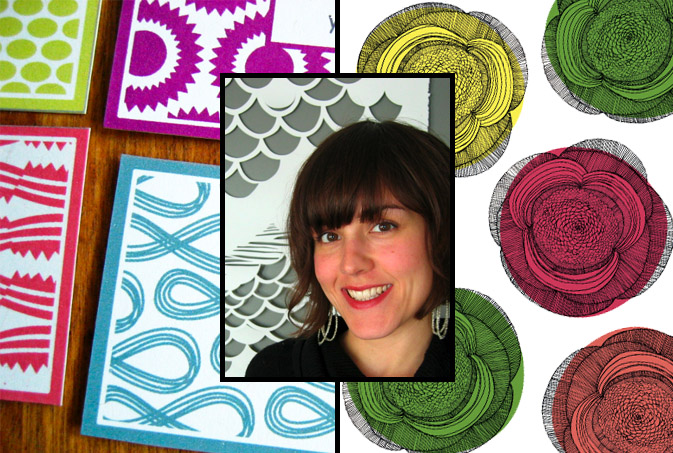
Today I’m thrilled to feature a graphic jack of all trades. Carrie Ruby, a native Houstonian and current Manhattanite, has been a part of the creative team at Future Brand for the past four years. For anyone who’s familiar with the world of branding, they’ll understand that a brand must represent quality, consistency and a good degree of uniqueness. All of these qualities are evident in Ruby’s pattern work. Be it sharp vector repeats or organic negative space, each and every layout is distinctively fresh. Check out our Q+A for a glimpse into Ruby’s daily routine!

*            *            *

PP:  What websites and news sources do you generally start your day with-do you have a daily routine for news/blog/information consumption?

CR: Keeping up with current information is an essential part of my daily routine.  I usually get to my desk a few minutes early so I can skim all the blogs/sites that inspire me and help to inform me about the latest specific trends such as color and texture and general developments in design and design criticism.  Here are several of my essential daily reads:

Pattern Pulp
Oh Joy!
Swiss Miss
Mrs. Lilien
PS I Made This
Design Work Life
We Love Typography

PP:  How did you discover your talent and how has it evolved over your creative career?

CR: When I was a toddler,  I had this habit of making collages out of food.  Surprisingly, my parents saw this as nascent talent and nurtured my creative tendencies enrolling me in art classes at a very early age.  These art classes eventually led me to the School of The Art Institute of Chicago where I received a BFA in Graphic Design.  I would definitely say that moving from Houston to Chicago to NYC has had a profound  influence on my designs. My move to NYC inspired me to start creating pattern works.

PP: Please explain your design process when approaching new projects and pitches.

CR: My design process is fairly intuitive. I usually start with a brainstorm, mostly around attributes associated with project at hand.  With that inspiration, I tend to make a small mood board, to use as a reference for color and texture and trends. I sketch by hand, which informs my sketching on the computer.

PP: What is your preferred method of execution? (ie. collage, computer, handwork, etc.)

CR: My preferred method of the execution is a combination of all of the above. I think it just depends on the nature of the project. Sometimes I create something that is 100% hand-sketched and then I just use the computer to enhance and help create a repeat. Other times I depend solely on the computer. I like think that the method of execution I use is related to the specific project at hand.

PP: When is the last time you took a professional/creative risk? Please explain.

CR: The greatest risk I ever took was moving to NYC four years ago for a three month contract job that paid $12 per hour and knowing no one in NYC.  I had just received my BFA and thought this would be the time to make the move from Chicago to NYC. I never imagined that that a three month contract job would have turned into a 4 year career.  Over the past four years, I have been working with some truly amazing and talented colleagues and this position gave me the opportunity to experience Dubai.  It is the best risk I have taken so far!

PP: How do you incorporate commercial trends into your work and and is this a factor that drives your design?

CR: I definitely look towards color in commercial trends to drive the patterns that I create. Looking back on my work, I have noticed that you can see a clear color palette reflective of the season when I created the pattern.  Also, I am always aware of current fashion when I design. Whether the world is going through a geometric, flannel, or neon phase, I use those fashion cues to inspire my designs and the color ways of my patterns

Creative City Tour: DUMBO


DUMBO_pattern-tour1

I’m very pleased to announce the start of a new series we’re launching:  The Pattern Pulp Global Tour.

In today’s digital travel age, we’re all familiar with the endless to-do tips found on sites like the New York Times, Trip Advisor and Gridskipper.  While more traditional recommendations are always welcome, the notion of self-discovery should not be forgotten. With each neighborhood exploration, we hope to take our readers off the beaten path to uncover the overlooked elements of city living, be it decals on an office building or graffiti in a bathroom stall.  Some of what we feature may be gone by the time you arrive, others, such as buildings and landmarks will certainly find their place along the chain, but either way, our goal is to provide the groundwork for a visual stream of consciousness.

Today, we’re featuring Dumbo, a creative and industrial gem that is located just over (and under) the Brooklyn Bridge. Have a look, take the walking tour and let us know what you think!

*            *            *

1. Hallway: 147 Front St.

2. Workshop Loves You, glass decals: 147 Front St.

3. Dumbo Arts Center, 30 Washington St.

4. Exterior building details, Water St. at Old Dock St.

5. Cafe Baco pattern napkins: 71 Jay St.

6. Cafe Baco metal signage: 71 Jay St.

7. Graffiti portraiture on cement steps: 70 Jay St.

8. Brooklyn Bridge Flea Market, metal tiles: 22 Water St.

9. St. Ann’s Warehouse, Playhouse: 38 Water St.

10. Pastel floral door, 128 Front St.

11. Brooklyn Bridge

12. Womens bathroom graffiti: 147 Front St.

The full set of photos can be viewed here.

1-dumbo-frontstreet 2-dumbo-workshop 3-dumbo-artscenter 4-dumbo-warehouse 5-dumbo-bacocafe1 6-dumbo-bacocafe2 7-dumbo-jayst-graffiti 8-dumbo-fleamarket 9-dumbo-stanns-warehouse 10-dumbo-frontstreet 11-dumbo-brooklyn-bridge 12-dumbo-front-street-bathroom 13-dumbo-68Jay

Service: Microtrending with Pattern Pulp


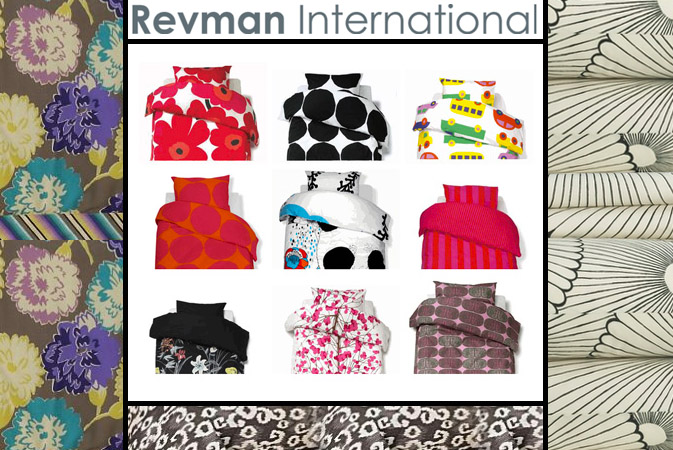
microtrending_revman

Pattern Pulp recently gave a microtrending presentation for the design team at Revman International.  Revman is a bedding manufacturer who licenses brands ranging from Marimekko and Steve Madden to Michael Kors and Tommy Bahama.  While we’re no stranger to the Home Department, it was a true pleasure to get out from behind the desk and share some of our latest findings.  It’s affirming to know that we can help designers and firms connect the dots from inspiration to commercial application.

Interested in a practical approach to dot-connecting? Contact us to have Pattern Pulp work with your team.

Flooring Solutions for Every Space


A few weeks ago, our dear friend Judy Prays requested pointed guidance on flooring solutions.  Having just left Brooklyn for LA, she had an endless to-do list, and getting her apartment in order was one check in need of web aggregation.  Scroll through our list of colorful solutions, as options range from custom to DIY.

Birds + Fish:

flooring-solutions-mammals

The Fish Rug by Eva Zeisal at The Rug Company, Bird Scallop Printed Rug at Urban Outfitters and the Flock Rug at CB2.

Florals:

flooring-solutions-florals

The Como Collection at Funky Rugs, Calvin Klein Floral Loom at Funky Rugs, and the Blosson Tree Rug at Urban Outfitters.

Earthy:

flooring-solutions-earthy

Forest Floor Rug at Angela Adams, Gold Leaves Rug at Spacify and Branches Rug at Spacify.

Puzzles:

flooring-solutions-puzzle

Puzzle Perser by Katrin Sonnleitner, Against the Grain at Flor and Puzzle by Puzzle Floor.

Floor Stencils:

flooring-solutions-stencils

Home Offices of De Leon & Primmer Architecture Workshop, JA45 Mokko stencil featured on Apartment Therapy and Catherine’s hand painted floor pattern featured on Design*Sponge.

Bold Geometrics:

flooring-solutions-bold-geometrics

Kashmir by Kyle Bunting , Lemon Ginger by Madeline Weinrub and The Xian Collection by Brink and Campman for Funky Rugs.

Sticker/Adhesives/Appliques:

flooring-solutions-stickers

Electrical Tapped Floor in NY Mag, Large Floor Sticker at Rockett St. George and Nenuphar stickers at Made in Design.

Graphic:

flooring-solutions-graphic

The Xian Collection by Brink and Campman for Funky Rugs, Crystals Rug at Angela Adams and Jorun Rug at Ikea.

Painterly:

flooring-solutions-painterly

Bois at Jamie Drake Rugs, Tibetan Modern Rug at Spacify, Blue Rink at The Rug Company.

Additional Contributions by Emily Gup.

Interview: Beci Orpin


beci-orpin1

The creative work flowing from Beci Orpin’s Melbourne studio is incredible.  Just click on Orpin’s site and you’ll understand that her world of graphic design is more magical than most.  A menagerie of colorful mushrooms and fantasy-inspired silhouettes march across the screen with unabashed purpose, preparing the user for a unique mix of commercially friendly, widely applicable artwork.  While many are familiar with Orpin through her women’s clothing line, Princess Tina, she has recently closed the doors on this decade long endeavor in an effort to focus on other creative pursuits.  Check out our Q+A for a glimpse at Orpin’s creative process in addition to where you can find her creations in the coming season.

*            *            *

PP:  What websites do you generally start your day with-do you have a daily routine for news/blog/information consumption?

BO: I don’t usually have time to check blogs on a daily basis, I would says it is probably more of a weekly occurrence but when I do, the some ones I like are:

reference library
stork bites man
lena corwin
loobylu
meet me at mikes
fine little day
design sponge
the design files

PP: How did you discover your talent and how has it evolved over your career?

BO: I am not sure I discovered it – I had some sort of weird tunnel vision – there was nothing else.  Drawing and creating is all I ever wanted to do.  I remember 2 defining moments – one when i was 6 and drawing a picture of a wedding, and one when I was about 14 and drawing a cat. I cant remember exactly what happened, but while doing those 2 drawings something clicked and it confirmed that being creative was what I loved, and wanted to do with my life.

PP: Do you discuss your work with other designers?  If so, how does that impact your creation process?

BO: Most of my friends are in creative industries, so I guess as part of our general conversation we talk about work.  If I am stuck on something and need advice, I know I can always get honest and useful opinions from my partner/husband Raph and my assistant Leah. I think its a very valuable thing to get others opinions, especially when  you work for yourself – its easy to get trapped in your own world.

PP:  Where do you usually work on your patterns and what is your preferred method of creation + execution?

BO: I work with patterns in many forms, although a lot of my pattern work is for textiles.  I have also created patterns for wallpaper, murals, stationery and packaging.  As far as method,  it depends on what the pattern is for.  I don’t have a preferred method and will just do whatever is appropriate for the job. I am really liking hand-collaged paper mixed with computer lately.

PP:  When is the last time you took a professional/creative risk?

BO: Last November I decided to stop creating the women’s clothing line, Princess Tina.  After 8 years I had just had enough and felt it wasn’t relevant to my life anymore and decided to put all my energy into freelancing, my kids line (tiny mammoth), and a new line I am doing under my own name.  It was a risk because Princess Tina was still generating income for us and giving it up meant that income was no longer going to be there.  Though from the beginning, Raph and I decided that we don’t run our own business just to make money, we have to love all the projects we work on 100%.  I have never regretted leaving for one second and think by dedicating more time to other things, they will in turn replace some of the income Princess Tina brought in…. or maybe i will have to get real job instead!

PP:   Do you incorporate commercial trends into your work and if so, is this a factor that drives your design?

BO: I try not to follow trends as such, but I think it does happen sub-consciously sometimes. Obviously when you are following a brief from a client, sometimes you have to follow trends.  If I do, I at least try and interpret them in new ways.

Interview: Amy Soczka


amy-soczka-patterns

It’s always a pleasure to jump beyond the coastal design scene to inspect what’s going on in the midwest.  While casually scrolling through design*sponge’s highlights a few months back, I nearly flipped when I stumbled upon Amy Soczka’s paper cut out displays for Urban Outfitters.  Paper has become a popular retail material as of late, as it’s affordability and versatility is incomparable. Soczka’s creations tap this trend while setting new creative standards. Her intricate handwork and artistic eye crosses multiple mediums and platforms, ranging from printed greeting cards and homegoods to commercial collaborative ventures.  Check out our Q+A for a glimpse into Amy’s daily routine.

*            *            *

PP:  What websites do you generally start your day with- do you have a daily routine for news/blog/information consumption?

AS: A few of my favorites right now are:

designspongeonline
sfgirlbybay
ffffound
jeanasohn
dearada
lenacorwin
fecalface
nytimes
kalman.blogs.nytimes

I also check in at Flickr and Facebook to see what my friends and contacts are up to. I tend to poke around online while I am enjoying my coffee and planning my day – all of the design blogs provide good eye candy and motivation to work harder.

PP: Do you discuss your work with other designers?  If so, how does that impact your creation process?

AS: One thing I miss about art school is the opportunity to discuss work with a variety of people at any time. Working in my home studio, I don’t often get the chance to interact with other designers. When I am having a hard time with something, I will seek feedback from friends who are artists or designers. Ultimately what I need is a new perspective – second-guessing myself is a common challenge and it’s good to have people who can give encouragement or criticism to help the process along.

PP:  Where do you usually work on your patterns and what is your preferred method of creation + execution?

AS: I have a studio in my home and that’s where I spend most of my time. It’s getting pretty crowded in there though, so when possible I’ll take my laptop to a different area of the house and camp out. My method is consistently a mix of computer and handmade technique, but I would definitely say that every design and idea starts with a drawing in my sketchbook.

PP:  How did you discover your talent and how has it evolved over your career?

AS: Some of my earliest memories have to do with drawing: drawing contests with my sister, having access to piles of fresh white paper all the time because my grandfater worked at a paper mill, being allowed to color on the wallpaper that covered the kitchen walls because it would be torn down the next week. I was always in art clubs and after school drawing classes – my mom has been a constant source of encouragement and gave me a lot of opportunities to explore.

I think the evolution of my work over the last 5 years has been about finding a way to do what I want to do and make a living doing it. I have been stubborn and sort of wiggled my way into the place I am now and the challenge is how to keep it moving forward so that I can call this a career.

PP:  Do you incorporate commercial trends into your work and if so, is this a factor that drives your design?

AS: It would be nearly impossible for me to be a part of the design community without having a certain amount of consideration for trends and what’s hot. I never approach new work thinking about that, but I do think about how I can apply my ideas in innovative ways and how people react to one design more than another.

PP:   Do you have any advice for younger designers just getting started?

AS: I think it’s really important to have a well-rounded background. Drawing, printmaking, photography, and graphic design are all closely related and to know something about each of them is going to make your process stronger. Avoid oversaturating yourself with design – I love looking at the work of my peers, but sometimes I have to take a break from it to clear up my vision. Seek out opportunities to learn from people who are where you want to be, whether that is an internship or a conversation – people who are proud of their work generally want to share that with others. You won’t get very far sitting still, so ask questions and get involved. Lastly, a good friend of mine told me the key to success -“work on your work.”

Tracking Repetitive + Awesome.
On Instagram.