Pattern Pulp

Patterns in Chocolate


Though we sent a brief thumbs up about this last Friday, we realized it was worth sharing the video for the true impact of why it’s so special (thank you Grace). Artists are always weaving hidden transformations and surprises into their work and Studio Wieki Somers along with chocolatier Rafael Mutter outdid themselves with their installment, Chocolate Mill. In conjunction with the Gerrit Rietveld retrospective, Vitra Design Museum invited five of the most innovative designers from the Netherlands to develop a concept.
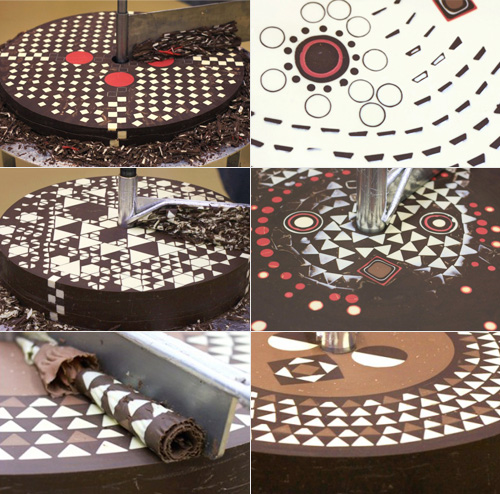
As the wheel is ground down, new shapes, patterns and colors emerge, revealing patchworks of mouth-watering ingredients. In their own words,

“We have created a device, a chocolate carrousel, by adapting a machine used mainly in Switzerland as a cheese slicer. We use it in a different way, as an instrument that mediates between us and the chocolate. We also designed the chocolate which the machine processes, by inserting memories into it like fossils. By rotating the carrousel’s arm, one image appears while another fades away.

Eating the delicate flowers generated by this process will be a completely new experience of tasting chocolate. Unlike breaking a conventional chocolate bar, the material now becomes so fragile and generous. It is affluence and scarcity at the same time: slicing layers of pleasure.”
 

Patterns & Branding at the Arizona Biltmore


Last weekend my friends and I packed our bags- from various parts of the world and headed to Phoenix, Arizona to celebrate the wedding of one of our dearest friends who’s currently living in London.

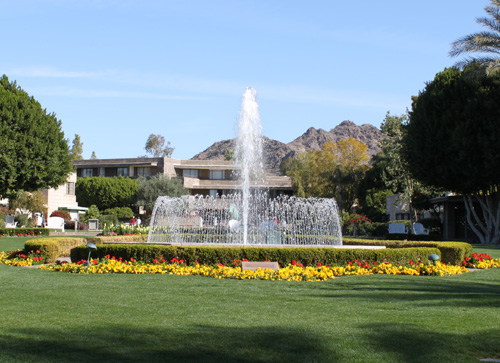
Upon arrival at our hotel, the intricately designed Arizona Biltmore, Lily, the bride, exclaimed (as many friends and family members do these days), “this hotel’s perfect for Pattern Pulp!”

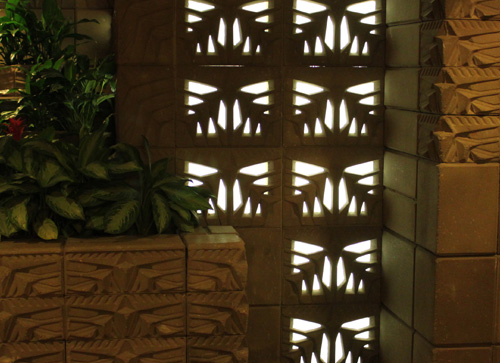
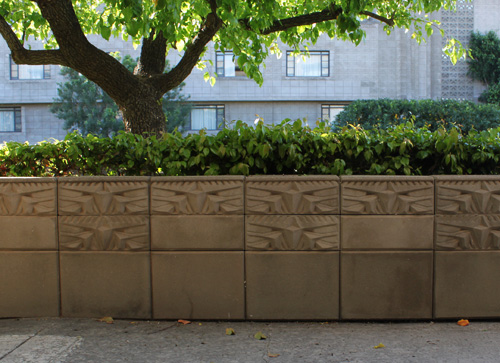
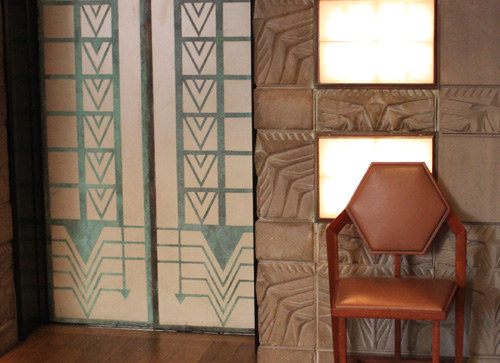
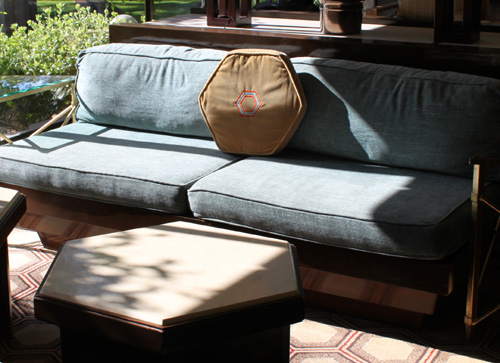
She was right. The deco pattern motifs were quite literally, everywhere.

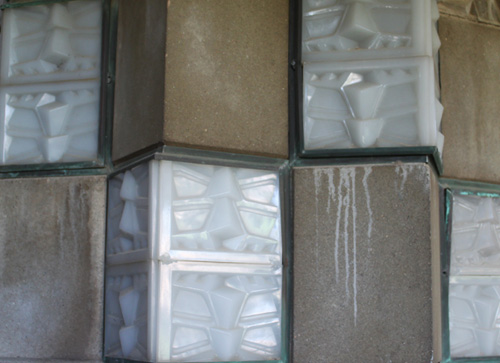
Frank Lloyd Wright in collaboration with Albert Chase McArthur were responsible for the masonry “Textile Block” construction which was implemented throughout the hotel and grounds in 1928.

From cement blocks to geometric carpeting, to back-lit lighting, landscaping and interior furniture, the deco theme transports you to old-world Hollywood, emitting a mood of what LA or Las Vegas may have been like in the 30’s, 40’s and 50’s.

Barely using their typographic logo, you know the vibe of the hotel. The surface design and architecture cooperate in telling the story of a unique destination beyond the cookie-cutter expectations of a chain resort.

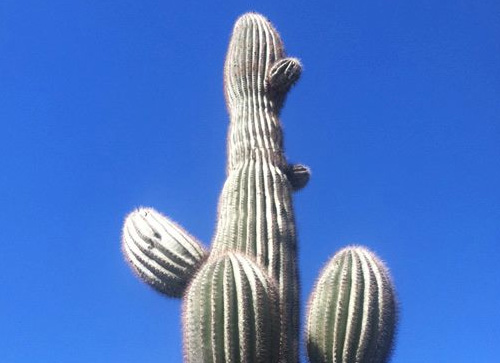
Large, expansive grounds allow for privacy, quiet pools are hidden behind cacti gardens and a wall devoted to presidential photos reveals the extensive history that’s walked the halls.

Looping back to the mission of the trip, it was such a treat to escape the east coast for a warmer climate, overdue reunion and tremendous celebration.

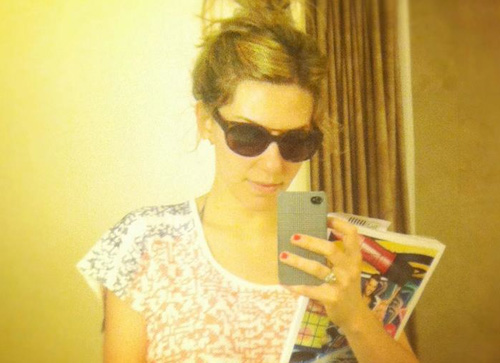
Here’s an instagram of pre-pool time on game day. I hadn’t been in a pool since July. I was excited, to say the least.

And with that, I’ll also admit that I’m officially old. I preferred the adult pool, where people read, veg and don’t twist down slides.

This little (or rather big) number made it’s way out of storage. Stains, holes and all, it’s still my favorite summer dress.

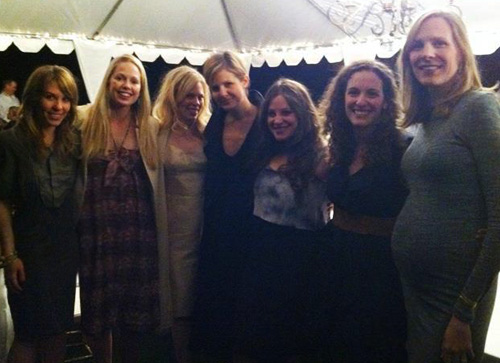
And finally, a few shots of the ladies (if you’re interested) from Shabbat dinner.

And a glammed-up wedding night. Have you been to Arizona? What do you think?


Repetition Elsewhere: Patterns as Branding


I’ve been on the pattern-as-branding bandwagon for a while. When a company embraces a creative style, then infuses their branding, a la Hotel La Amada, the results can be more interesting than simply reusing a logo.

Christina Binkley expressed a similar sentiment in this weekend’s cover story for the WSJ’s Off Duty section, with the subtitle, “Prints of all shapes and sizes are replacing logos as a new way to signal a brand’s identity.”

It’s refreshing to cast a light on this part of the industry. Patterns in product development are a tremendous business, as is forecasting – from fashion to bedding to beauty packaging to digital experience, I could go on- textures are mood enhancing and tribe specific and something I’ve buried my nose in for the past 8 years. If you have a moment, be sure to have a look, it’s an interesting read.


Creativity in Hong Kong


[slideshow id=29]

Continuing on the Hong Kong kick that is today, here are a few favorites. From kid patches and accessory details to street food, graffiti and a bit of personal silliness. Enjoy!


Book Review: Mapping Patterns of Information


Our ability to generate and gather information now exceeds our capacity to understand it. Researchers, scientists and designers around the world have been working to make sense of the multitude of today’s complex networks. Using innovative mixtures of colors, symbols, graphics, algorithms and interactivity, they have managed to clarify, and often beautify, the clutter. Some may say that this process can be seen as creating the syntax of a new language. Manuel Lima’s Visual Complexity: Mapping Patterns of Information was conceived and created to be the first dictionary of this new lexicon.

Showcasing and analyzing the variety of contemporary visual depictions of complex networks, the book also covers their historical predecessors, grounds for recent popularity, as well as exploring the ramifications of a new age of infinite interconnectedness. From representing networks of friends on Facebook to depicting interactions among proteins in a human cell, Visual Complexity presents one hundred of the most interesting examples of information-visualization by the field’s leading practitioners. Click here to purchase.


Sante Fe: Consumed & Informed


Michael Freitas Wood’s intricate patterns mounted onto wooden boxes are an interesting sight. Built with multiple overlapping grids of contrasting pigmented modeling paste, Wood explores, in his own unique way, the overwhelming amount of visual information we encounter on a daily basis from tv, the internet, digital images and motion pictures.

With hopes of breathing life into a static medium, Wood “offer[s] paintings that explore this issue by creating intensely compacted, highly charged visual designs.” For more info, click here.

Box Gallery: 1611-A Paseo de Peralta, Santa Fe, NM 87501

Tracking Repetitive + Awesome.
On Instagram.