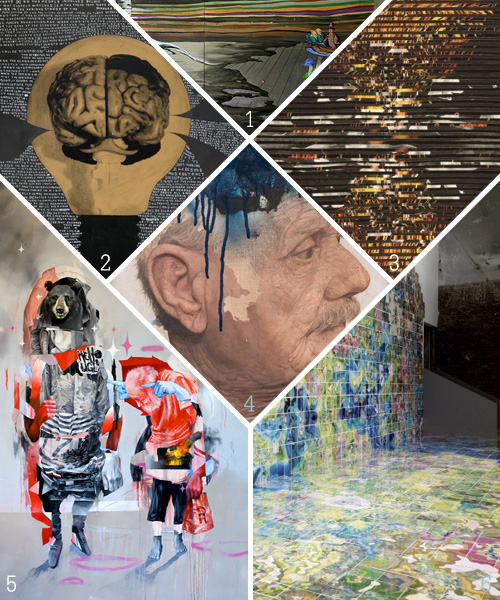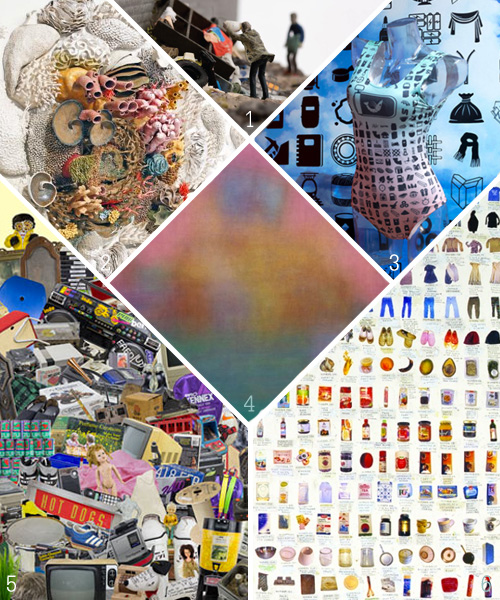
This week’s gallery picks dip into the environments we create and inhibit.
* * *
1. Twelve artists explore the psychological impact of recreating the world in tiny proportion and offer viewers an opportunity to Feel Big, Live Small in this multi-media exhibition. This display includes more than twenty works of art comprised of three-dimensional miniatures as well as photographs, digital images and video created with miniature sets at The Mini Time Machine
2. Artist and ocean advocate Courtney Mattison creates large scale ceramic installations and sculptures inspired by science and marine biology. Her intricate hand-crafted porcelain works celebrate the fragile beauty of endangered coral reef ecosystems and promote awareness to conserve and protect our natural world at Virginia Museum of Contemporary Art
3. The ocean makes up 71 percent of our planet’s surface. So, how is it that we know more about Mars than the marine environments of Earth? As impenetrable as the deep oceans are to humans, we imperviously live in a black box of international shipping, reducing the ocean to a surface rather than an environmental force. Martin Zurkow’s MORE&MORE is a socioeconomic, post-natural foray into the infrastructure of global trade: a systemic means to a never-ending end of economic growth at bitforms gallery
4. In his new body of work, Jason Salavon explores the ways in which infinite variation and permutation—supercharged by large networks—is the engine of our exploding digitized culture. Debuting 14 new works in a variety of media, the artist furthers his investigation of the vast visual capacity engendered by an ever-advancing social and technological landscape. With an emphasis on the recent massive exponential growth of digital data, Salavon uses pop cultural touchstones to guide us through various examples of the unbounded possibilities of this phenomenon at Mark Moore Gallery
5. Jenny Odell and Philip Buscemi create The Bureau of Suspended Objects, a series of window-like displays of objects in a cabinet of curiosities manner. Following a residency at Recology SF, Odell’s work has focused on the ways in which manufactured objects circulate from the factory to our homes, and how our sentimental attachment to objects changes their initial commercial value. The objects (whether brand new, in-use, or trash) become tools for an investigation into the ways we invest and divest values into and from material goods, and ultimately on the powers of visual merchandising at Contemporary Jewish Museum
6. Simon Evans misappropriates various characteristic tools for the objective depiction of reality, so as to compose radically subjective work. Embodying forms of dialogue between his interiority and the world, his pieces act as much as a research for the meaning to allot to individual experience, as a permanent exercise in the re-appropriation of the everyday at Palais de Tokyo