Pattern Pulp

Learn to Communicate with Patterns


brad_woodard_patternclass_skillshare

Without color, pattern or texture, where would we be? In a black and white world, void of visuals (perhaps). Learning to use these elements to communicate a message is a skill Brad Woodward of Brave the Woods has honed rather successfully. In his recent Skillshare class, he’s opening the door to his studio to share some tricks of the trade. Learn how to convey moods, design for editorial and experiment illustratively. For a glimpse of the student projects to date, click here.


Color: Typographic Illustrations


2aDan_blackman

I dare you not to pin these posters. Daniel Blackman‘s the talent behind the playful collection, merging type, pattern and a prominent palette. Each design represents a bike sold at Rivendell Bicycle Works and shares a theme relevant to the product. The results are a perfect balance of harmonious chaos.


Clever Seating for Creatives


I’m constantly reviewing photos from past travels. Whether I’m pulling a story together related to art, mosaics or trends, everything’s mentally cataloged. Today I figured it was time to do a stool round up.

Lately, cushions from the US seem to fall into one of two categories: neutral and organic or vibrant and geometric.

If you hop across the Atlantic (or perhaps the Pacific) though, you’ll notice that designers abroad are a bit more playful.

From this clever needlepoint top at Milan’s La Rinascente department store to these glitter-covered tree stumps at Bensimmon in Paris to this sad emoticon in Tokyo, to this Helsinki technicolor stool, all examples illustrate how to brighten up a home with a little unexpected character.


Repurposing Patterns with Pottock


Converting his familiar character illustrations into upholstered fabric, Geoff Mcfetridge‘s venture into furniture is as playful as it is practical. The Allofus chair, a product of Pottock, him and his wife’s wallpaper company, merges midcentury styles with a playful pattern. Successful repeats have many legs and it’s exciting to see this soft, tangible extension executed so beautifully.


Book Review: Black Antoinette


Olaf Hajek is currently one of the world’s most successful and well-known illustrators. His work can be seen in newspapers including the Washington Post and the New York Times, in magazines such as Rolling Stone and Time, in advertisements for international brands, and on stamps for Great Britain’s Royal Mail.

Despite the diversity of his clientele, Hajek makes no aesthetic compromises. His characteristic style, which is infused with a folkloristic naivety and freshness, is what makes his work appealing to a broad audience and range of customers. Now his personal work is garnering increasing attention on the international art market.

Black Antoinette is a beautiful and striking collection of Olaf Hajek’s most recent work. Consisting mostly of editorial contracts and commercial portraits, the examples in this book showcase a remarkable style that has become more free and painterly over the last several years. The preface was written by Dr. Philipp Demandt, the head of Berlin’s Old National Gallery.

 

The Art of Illustrative Journalism


Illustrative journalism is a pretty big deal in my playbook. When I was a kid, my grandfather would subscribe to a different magazine every year and I’d fall in love again every January.

Art directing a story isn’t a simple task and the creative minds in charge of hiring talent  always amaze me. Much like the power of a good book cover, a great illustration tells multiple narratives.

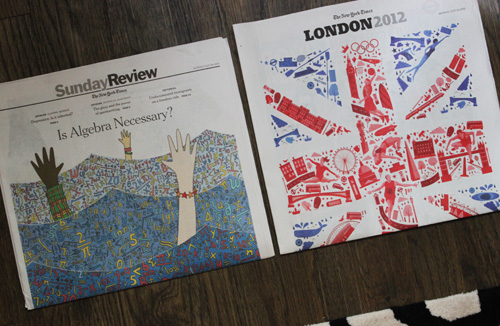
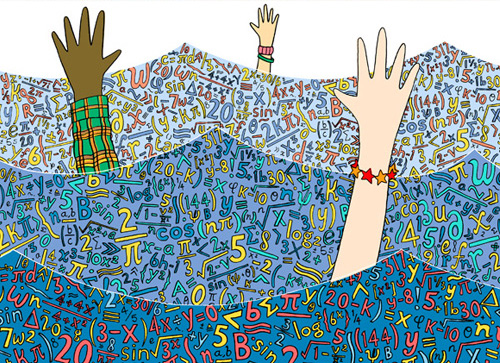
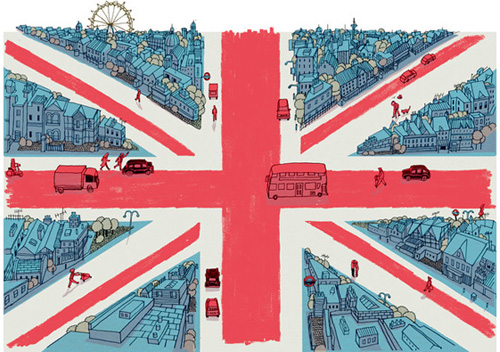
Above are a few selected images from last week’s New York Times. We have I Love Dust, Adam Hayes and Josh Cochran. These artists have created texture and depth using an assigned storyline. Personally I love the busyness of it all- do these work for you?


Tracking Repetitive + Awesome.
On Instagram.