Pattern Pulp

MSGM's Pythagorean Theorems


Every once in a while I like to check in and see the trunk shows on Moda Operandi, as they’re beautifully curated and a window into what will be hitting the store shelves. Today’s presentation from MSGM is fantastic.

Reminding us of Megan Geckler’s 8-bit art series, Christopher Kane’s random stripes and Marni’s use of translucent color blocking, the patterns and unexpected details are sophisticated and experimental.

The camouflage, plaids and florals remind us that the underlying basics are intact, though they’ve been manipulated to keep themes fresh. If I had an unlimited budget I’d scoop up the entire collection, as it’s a beautiful example of fashionable art.
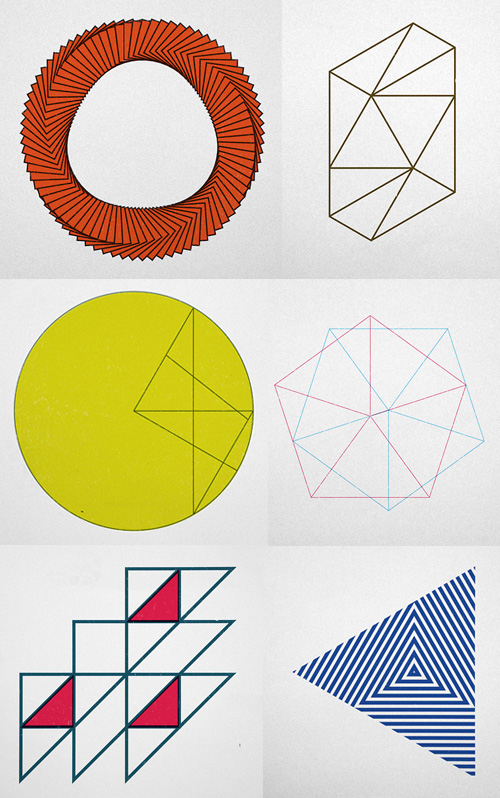
 

Repetition Elsewhere: Geometry Daily


When’s the last time you were given a bag of tanagrams and ask to build something?  Kindergarden? Today’s feature is devoted to the art of geometry and the manipulation that accompanies graphic design. The shapes from Geometry Daily have a whimsy to them that bend the rules. Each color combination is mathematical in a whimsical way. Have a look!


Shadowfolds: Geometric Designs in Fabric


Origami and textiles merge beautifully in Shadowfolds: Surprisingly Easy-to-Make Geometric Designs in Fabric, an exciting book by origamist Jeff Rutzky and artist Chris K. Palmer.

Shadowfolds are intricate designs in fabric derived from a rich blend of traditional motifs, such as Moorish tile and classic Japanese origami, expressed in a contemporary style and evolved to utilize the unique capabilities of fabric. The technique, pioneered by artist Chris K. Palmer, uses classic geometric patterns to create works of art in fabric from a single, uncut panel of cloth using a simple, three-step process.

Some applications use light against fiber, while others reveal the depth and richness of the folds. In addition to explaining the three very simple steps of the technique, the authors show how even novice folders can create breathtaking works of textile art, as well as fashion-forward clothes, accessories and home furnishings by incorporating these three-dimensional embellishments.

For more imagery, visit Burda Style


Book Review: The Geometry of Pasta


The Geometry of Pasta is not your everyday cookbook. No, this book is a delight for all graphic design, pasta-loving fans. In addition to over 100 recipes from Chef Jacob Kenedy, the accompanying pages are filled with black and white pasta renderings. Kenedy has teamed up with the award-winning designer Caz Hildebrand to reveal the science, history and philosophy behind some spectacular Italian dishes.

Everything about the book is well designed, making it a bona fide treat for the eyes while teaching tricks of the trade for your belly. This fusion of food meets design has become an instant classic that will need a space on your bookshelf. To purchase, click here.

Artist Profile: deJoode Design


Vector contrasts have played a significant role in fashion photography over past year, aligning soft textures with sharp boundaries. Interestingly, deJoode Design, a commercial sart of the fine art studio of Rachel de Joode, encompasses this with a freshness that pushes the style forward. Combining people, objects and performance, she achieves otherworldly realities with momentary still lifes. Check out her portfolio to have your mind blown.

Trend: Tribalizing Tanagrams


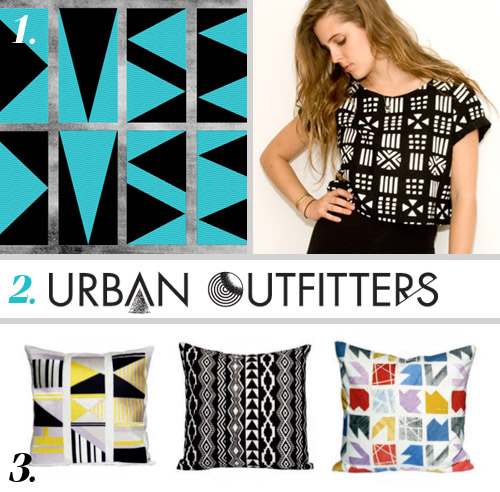
When was the last time you thought to yourself, bold and simple’s the way to go? Perhaps yesterday? Dusen Dusen, a new label by Brooklyn designer, Ellen Van Dusen was featured in a Daily Candy mail out this week, adding fuel to a quickly growing fire that graphic designers are embracing triangles, squares and circles again.

Whether the patterns are primal and bold, as exhibited by Dusen Dusen and Suki Cheema, or being used to manipulate text, as evident by Urban Outfitter‘s most recent logo design, one thing’s for sure, mismatched shapes aren’t going away anytime soon. Suki Cheema’s recently launched home collection was one of the best displays at this year’s gift show, and a breath of fresh air from endless aisles of Tory Burch-like geometrics. Using just a grid and creative geometry, designers are proving that primal can be interesting, so long as the shapes convey color and movement.

Tracking Repetitive + Awesome.
On Instagram.