Pattern Pulp

Budget: Taping Spaces


taping-spaces-patterns

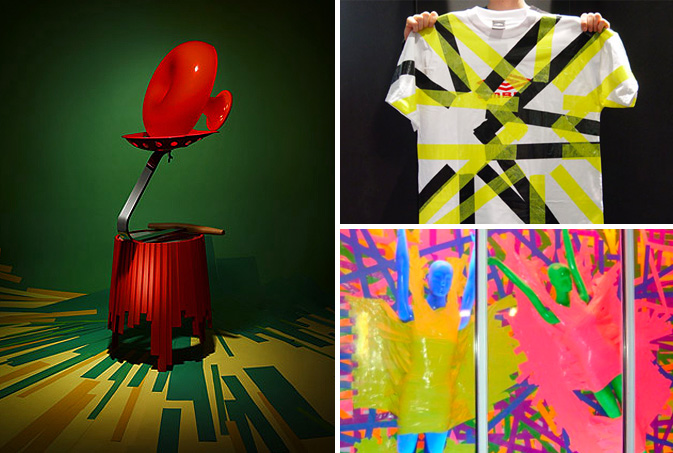
Budget slashing has forced artists, retailers and marketers across the globe to get creative in finding lower-cost solutions to advertise their wares.  Be it a rummage in the craft bin or a simple play on words, trend-setters such as Anthropologie and Barneys have proven less can be more when the concepts are strong. Today we’ve chosen to focus on tape as a decorative way to enhance a creative message.  Earlier this summer the malleable nature of this medium was incorporated in the Color Forms layout featured in the New York Times Magazine where the photographer chose to compliment this Matryoshka table with vibrant colored floor striping.  Applying similar energy and stiff color blocking, this repuposed Umbro t-shirt from 2006 reveals that DIY done right can update any brand.  Using color, function and a healthy dose of sexy, Marc Jacobs has created one of the simplest and most striking window displays on New York’s Bleeker Street, proving that duct tape can work for even the most innovative designers.

Trend: Measuring Up


tape-measure

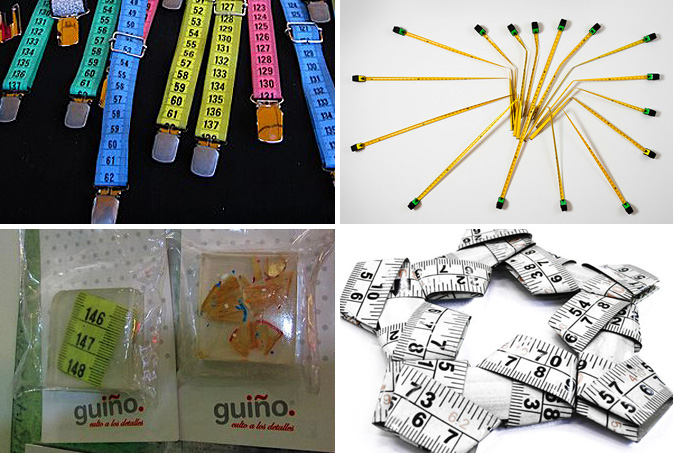
Tape measures can be used for more than just sizing up material — in some cases they are the material. Fusing pop art vibrancy with everyday functionality, the tool responsible for measuring our daily lives is stepping out from behind the scenes to claim a bit of creative recognition. We first noticed ruler art on the streets of Palermo Soho, where brightly colored suspenders popped up at a local craft fair. Inside the walls of Tienda Palacio, a trendy Buenos Aires boutique, folded flower pendants and resin keychain accessories reclaim the traditional notion of a tchotchke.

The fine art world hasn’t been exempt from the trend. In 2008, Debbie Smyth of Ireland, combined black and white tape measures to form magnificent geometric woven prisms. Using less malleable materials, a unique wall hanging featured at this year’s ArteBA was composed of several purposely-misaligned wooden rulers to create striped texture. Combining photography with witty art direction, “Space Time,” by Kevin Van Aelst explores multiple dimensions while simultaneously conveying wit through it’s “variable” measurement title.

Compiled by: Rebecca Silver

Service: Recession Saavy Patternmaking


pattern-career11

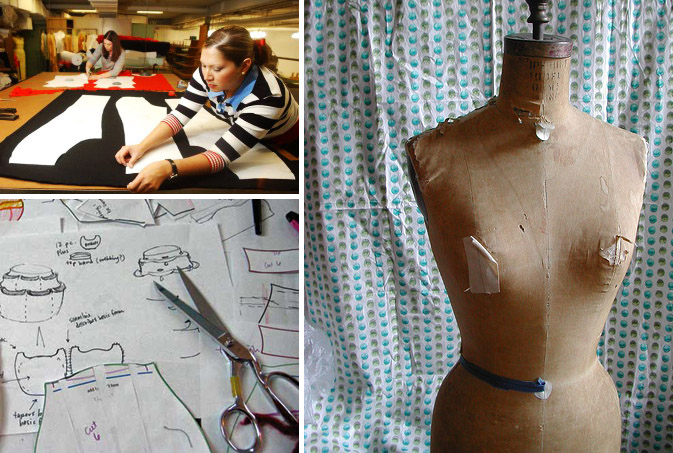
So you’re talented and terrified of not staying relevant in the ever-evolving digital marketplace.  For the patternmakers out there working strictly by hand, you’re in luck if willing to expand upon your skill set. Orli Sharaby, the fashion editor for PSFK, recently forwarded us some uplifting news which she spotted on the blog, Fashion Biz Inc.  FBI just announced the launch of a brand new free program for unemployed patternmakers set to start at the end of April.  Courtesy of a grant provided by Microsoft Corporation, this special program offers free training to unemployed patternmakers who need to improve or enhance their computer skills in order to obtain full time employment.  Alternatively, if you’re a graphic designer looking to hop the fence onto the crafty side, the Etsy Labs in Brooklyn offer periodic patternmaking classes.  Sounds like a great opportunity to see if the grass is actually greener on the other side.

Artist Profile: Aimée Wilder


aimee-wilder

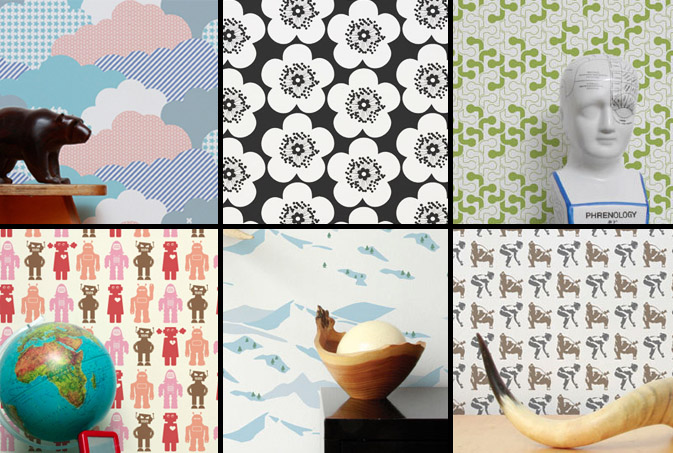
Aimée Wilder is a pattern designer to watch.  Her prints can be found throughout the homegoods and fashion worlds, adorning pillows, walls, diaper bags and most recently, footwear.  Each of Wilder’s repeats are beautifully sophisticated with commercial appeal that raises the mass market ante.  Applying a refined color palette, Wilder veers away from sugary pastels that are category specific.  As a native New Yorker, Wilder spent her school holidays exploring fashion showrooms where both of her parents worked, soaking in trends and textiles, laying a foundation that would later influence her budding career.  Keep note of Wilder’s work, as we’re certain only good things will come from this Brooklyn wunderkind.

Additional contributions by Emily Gup.

Fashion: Surrealist Hares


bergdorf-ainomaijametsola

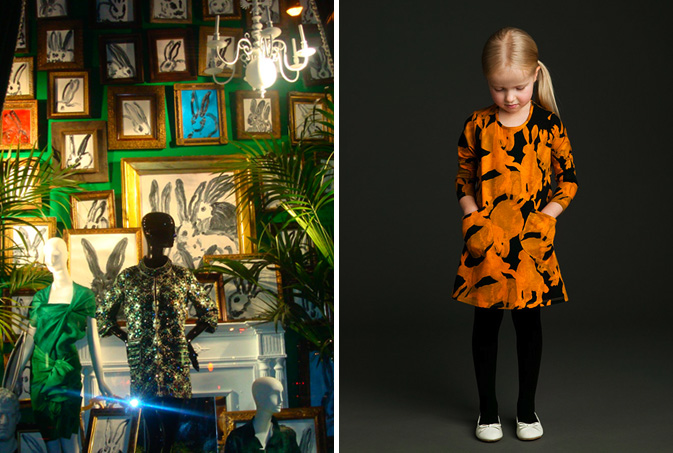
At the first sign of spring, bunnies start to emerge. This year’s been no exception, as countless prints and mediums have shared the unifying theme often associated with Easter.  The 2009 trend has appeared to take a refreshing left turn away from the usual pastel cuteness.  As seen in Bergdorf Goodman‘s windows last month, sophisticated gilded frames balance loose contour bunny portraits.  Jäniksen Vuosi’s rabbit toss for Marimekko‘s Autumn 09/10 collection presents a playful overlay of translucent silhouettes.

rabbits2

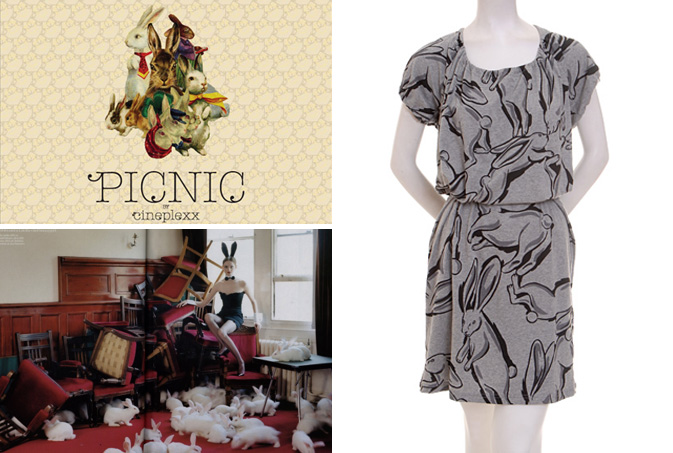
Cineplexx Picnic, a photo and design project by Pattern Pulp favorite, Alan the Gallant, collages rabbit profiles for the cover of their European music album.  Combining fantasy photography with real life story telling, Tim Walker’s UK Vouge photoshoot embraces the ideas of fertility, sexuality and femininity with the use of color, layout and subject matter.  Translating these surreal storylines into wearable fashion, Eley Kishimoto creates a dali-esque toss with leaping rabbits frozen in motion.

Interview: Deborah Bowness


deb-bowness

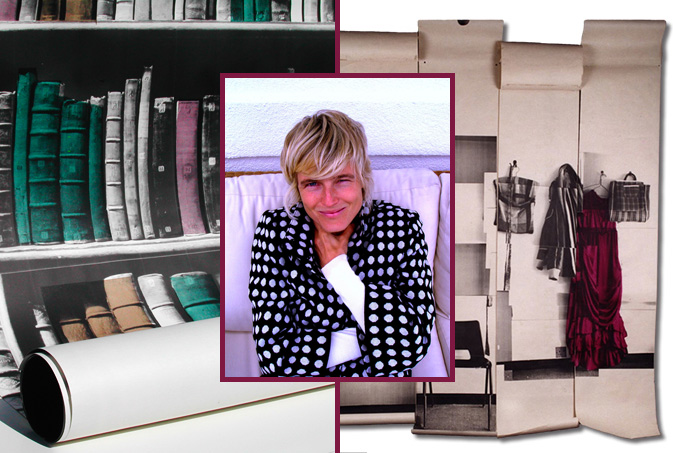
Our fascination with Deborah Bowness has only grown since last month’s faux library post.  Trained in Leeds, and later in London at The Royal College of Art, Bowness has been designing and hand-printing wallpaper for over 8 years. Her unique style of trompe l’oel has donned trendy locals such as the New York Soho House and Phillip Stark’s Yoo-Aldelgade in Copenhagen. Combining an artistically forward eye with experimental styles and luxurious materials, Bowness breaks traditional barriers, creating functional works of art that are a true breath of fresh air.  Reinterpreting the world with a photographic lens and 2D palette, her collections are as playful as they are sophisticated. Check out our Q+A for a glimpse into her daily routine.

*            *            *

PP: What websites do you generally start your day with-do you have a daily routine for news/blog/information consumption?

DB: I do not surf regularly.  I prefer books magazines and newspapers.

PP: How did you discover your talent and how has it evolved over your career?

DB: I focused on my creativity during my studies 3 years in Leeds, followed by a masters at the RCA London.  There is nothing like DOing it everyday to discover what you’re about.

PP: Do you discuss your work with other designers?  If so, how does that impact your creation process?

DB: I discuss my work with those (who) put it in its space or place.  The work becomes more real as it has it’s purpose.

PP:  Where do you usually work on your patterns and what is your preferred method of creation + execution?

DB: I have been working from home for the past year mainly with collage in sketch books.

PP:  When is the last time you took a professional/creative risk?

DB: I am currently taking a professional risk which I can not tell you about until its done.  I always try to take  creative ones- its not creative if it’s not a risk!

PP: Do you incorporate commercial trends into your work and if so, is this a factor that drives your design?

DB: I try to follow my own path.  I don’t find it healthy for my work to be involved with trends or the commercial (aspect).  Trends are ephemeral.

Tracking Repetitive + Awesome.
On Instagram.