
Pattern Pulp

How World Cultures Influence Fashion


Traditional costuming from around the globe is a constant inspiration for the fashion industry. Culture to Catwalk: How World Cultures Influence Fashion by Kristen Knox of The Clothes Whisperer traces the roots of today’s ready-to-wear lines back to cultural styles from around the globe.
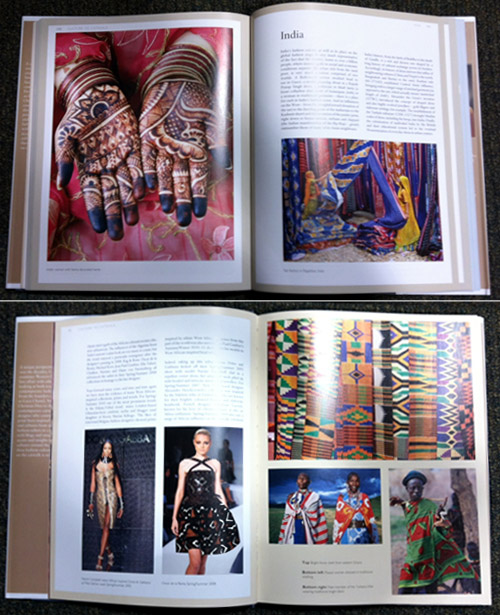
Culture to Catwalk explores the trajectory of fashion design, born as an industry around the same time that Orientalism swept Europe and colonies were established in Africa and India. Fashion incorporated these new exotic themes into its creativity and became inextricably mixed with ethnic and cultural sartorial traditions. The book’s narrative also comes full circle, going from local to global and back to local again to see what’s happening today in fashion in these countries and look at the effect the internet and globalization has had on design.


Book Review: Hand/Eye Global Color


HAND/EYE is an independent, international publication created to explore the nexus between design and development, culture and commerce, art and craft, and environment and ethics. Their latest issue focuses on one of our favorite topics- color. Global Color is comprised of 72 pages of photos and stories, offering insight into the symbolic importance of hue across diverse cultures. Photos via 2Modern


Fashion: African Kimonos


Our collective fascination with culture crossing is nothing new, though every now and then it’s important to sit up and take note of new projects. Serge Mouangue is an artist worthy of this attention, as proven by his Wafrica collection, a breathtaking cultural shakeup. This styled photoshoot combines the strength of bold and bright African textiles with the grace of the traditional Japanese Kimono. Strength and grace. Two contrasts united in women. They may appear different on the surface but they do share some cultural similarities. Both societies are very tribal and have a respect for hierarchy and an appreciation of the power of silence,” says Mouangue when asked about the theme of this project. “And then there are the differences. In Japan there is no improvisation. Here, improvisation can mean trouble, shame, difficulties. But in Africa, it means life, renewal, health and spirit.”

Coverage by: Emily Gup

Tracking Repetitive + Awesome.
On Instagram.