
Pattern Pulp

Trend: Paper's Second Life


Paper inspired fashion’s been making a come back for some time now. Economy-conscious retail displays, photo shoot backdrops, ad campaigns and merchandise are collectively toying with the perception of luxury, fashion and mass consumption. This Comme des Garcons advertisement is a playful stab at paper’s short shelf life. The unconventional layout distorts the model, looks like trash and invites the viewer to laugh at the irony of the storyline.

Following a similar creative path, Craig McDean‘s Paper Bag Princess spread from the September ’09 issue of W Magazine pairs discarded shopping bags with beautifully disenchanted models for a bag-lady inspired layout. Everyone in the fashion world knows how important the shopping bag is, as a foil stamped logo paired with thick paper provides consumer acceptance and a way to prove you can afford what’s inside. The out-of-store foot traffic is priceless.

Mac Cosmetics is taking a similar route with their Pret a Papier campaign. The paper doll styling conveys natural flawlessness- a look that’s achievable regardless of your economic state. In celebration of Earth Day, the theme of conscious consumerism is revisited by Daniel Harvey in this Bloomingdales Soho window. The gown is exquisite, voluptuous and made of trash- nearly a 3D version of the Commes des Garcon campaign.

Tackling this topic from the other side, this DIY Chanel bag, shot by Tommy Ton of the infamous fashion blog, Jak & Jill, presents a playful take on the world’s most recognizable bag. The irony in the details is so well executed, chain and all, that this image nearly looks like a set up and part of Chanel’s lower priced line.

Rounding out the category, it’s only natural to include this Louis Vuitton bag. While it’s not paper, the material is as amusing at the $1,996 price tag.  The definition of luxury turned on it’s head.
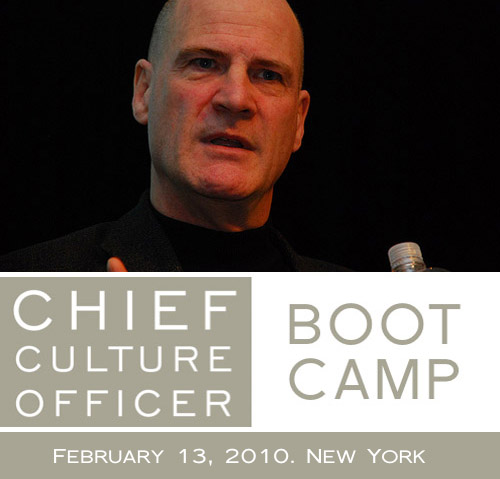
New York: Bootcamp with Grant McCracken


Following trends is a fun past time for many around the world, but can tracking ephemeral fascinations help your company and brands succeed? In Chief Culture Officer, anthropologist and consultant Grant McCracken argues that products and ads succeed when corporations capitalize on culture. Join McCracken February 13th for a day long boot camp in New York City where he shares why campaigns such as Nike’s “Just Do It” and Dove’s “Campaign for Real Beauty” succeeded where others failed, and how staying abreast on culture is now a full-time responsibility for a corporation. The interactive boot camp promises to be an interesting and informative event for anyone curious about how to incorporate trend forecasting into corporate cultures.

Print: Art vs. Commerce vs. Art


yvesdroiteyvesgauchejcdecastelbajac11

There has always been a thin line between art and commerce, but in the past year the line has grown ever thinner as artists freely appropriate commercial concepts.  The results have sparked controversial murmurs, as typically classical masterpieces have been infused with political spin. Whereas historically, it was not uncommon to hire artists to create advertising campaigns, this movement is turning that notion upside down.  Jean-Charles de Castelbajac of Casablanca has gained notoriety by hijacking popular imagery and adding a cultural twist.  His latest exhibition entitled Triumph of the Sign, showcases a series of western reproductions infused with recognizable branding.  Interestingly, these works were painted in China, complementing the idea of mass market demand.

nadiaplesner1

Last year, 26 year old art student Nadia Plesner caused a stir and triggered a lawsuit when she created a t-shirt with the image of an emaciated Darfuri boy carrying what appears to be a Louis Vuitton bag.  Plesner’s goal was to create a stir over the lack of media coverage devoted to the Darfurian crisis.  “In the western world our collective identity is based solely on logos and brands and how much we can resemble celebrities from show business.  We are raised by advertising and it is the only language we understand and respond to. Therefore, Darfur’s only chance of survival is to brand itself as a commercial phenomenon and imitate the popular trends of the west.”  Needless to say, LVMH wasn’t pleased about the appropriation of their logo-bedecked bag and fought back with vengeance.  This scenario is particularly interesting, as LVHM has become popular for commissioning artists to reinterpret their infamous monogram.  The Darfuitton Bag Plesner designed was in fact based off of Takeshi Murakami‘s comissioned work, presenting a commercial evolution of artistic interpretation.

moma-adverts

This past February, MoMA launched a subway advertising campaign in collaboration with The Happy Corp where 57 works from the private collection were distributed throughout various New York City subway platforms.  No sooner did the ads go up, Doug Jaeger and his Poster Boy accomplice were caught remixing the images they were paid to promote.  While many have viewed this guerilla marketing campaign as vandalism, others have acknowledged this appropriation as a statement on modern art.  “What I would hope is that it would cause debate and generate some argument, at a minimum,” said Jaeger, a thought that many should embrace, including the MoMA marketing team.

Additional Contribution by Emily Gup

Typographic Story Telling


visa-2

Visa’s most recent advertising campaign is the company’s first stab at going global. Who would have though it would’ve taken this long to send a singular message under one corporate umbrella?  Merging lifestyle concepts with playful typography, each go spot taps a local audience, incorporating pattern-appropriate themes. Interestingly, the international commercial, Gofesto weaves several adventurous concepts throughout a one minute reel, taking their viewer on a Visa inspired journey.  The thirty second American spot, entitled Aquarium, simplifies this journey with the use of emotion and special effects.  Though the reel has a beautiful kaleidoscope theme throughout, we wonder if the Disney formula was applied, as this spot seems much like a summer tralier.

visa3

All of these concepts (in addition to a few others) were executed by Chiat Day and can be found on Visa’s corporate website.

Tracking Repetitive + Awesome.
On Instagram.