Pattern Pulp

Around the Globe, Visiting Hong Kong


hongkong

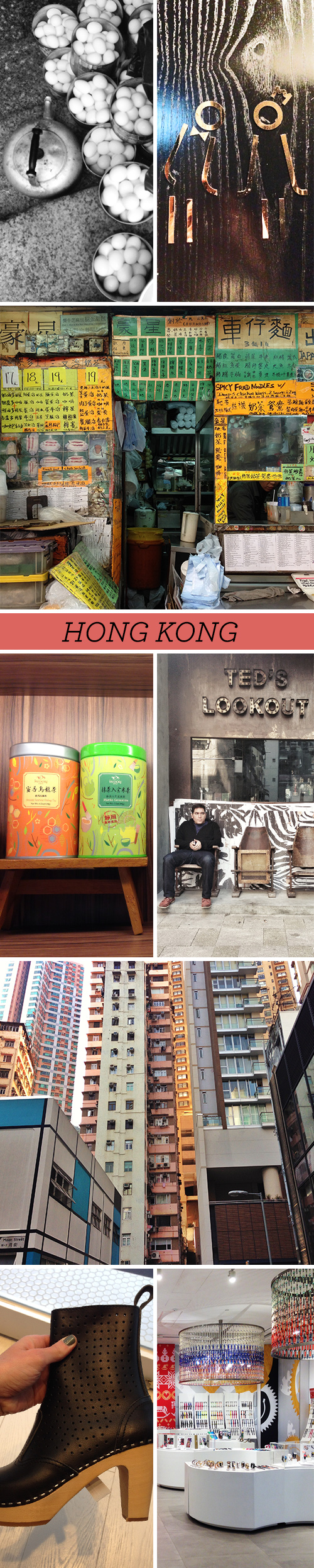
I’m ending this week with the final segment of my Asia series: Hong Kong…a place I’ve always felt I could live abroad (if Sydney or Melbourne were a no-go). The energy and pulse within Hong Kong City is electric. It’s been interesting to observe the transition from British rule back to Chinese leadership…the air quality’s become a bit more stifled, but the pace of globalization and commercialization of products, fashion and commerce have truly ramped up.

Here are a few shots from my stay (and a few tips). If you’re going, I’d recommend dining at the Press Room (if you’re yearning for a western meal), Ding Tai Fung (a Michelin Star causal-but-nice) Chinese restaurant, Rabbit Hole Coffee and Roaster to kick off your day, The Upper Room Bar on the top floor for incredible views of the city, lunch at Life Cafe (a fabulous healthy vegetarian spot in soho), and Star Street, where you’re find The Monocle Shop, Vie, and many other indie gems. If you’re looking for men’s custom tailored shirts at about $50 a pop, Roger Cheung of Roger Concept is your guy. For a more succinct list, feel free to follow my husband’s Foursquare tips.


Trend: Circular Styles


Circular Styles3circular spaces2

Circular motifs never get old. When history, science and creativity are hinged upon these forces, you realize why cyclical flow is a part of our daily vernacular. Much of the branding and styling I’m attracted to incorporates this concept, and you realize, over time, that it’s actually easy to reinvision a brand, packaging or any design for that matter, if the underlying direction has a timelessness to it.

From the mechanical curves of the Sonos logo to Dan Funderburgh’s recent illustration collaboration in the Manual for Speed, to ABC Carpet’s spiritual and nature-inspired retail merchandising to the graphic styling techniques in this Dazed and Confused spread, all overlap in relatable, defined ways.


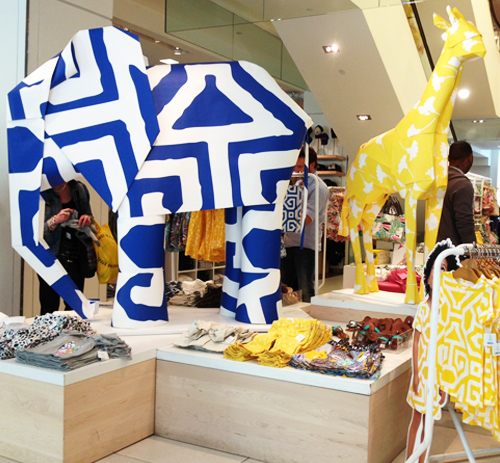
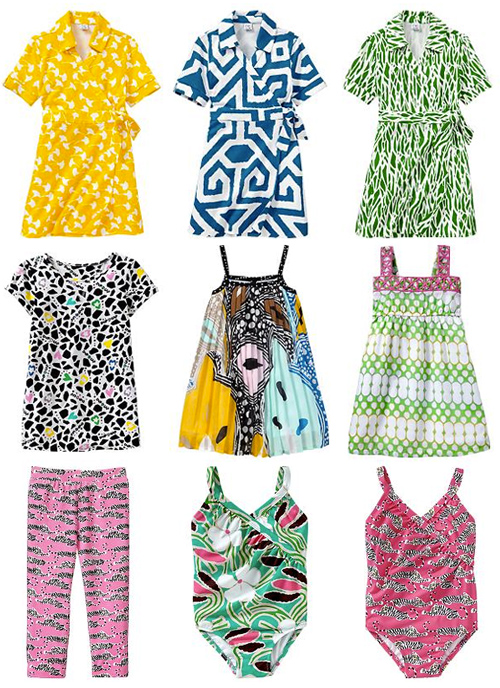
Patterned Safaris at DVF & Gap


1dvf_gap 2dvf_gap3dvf_gap

If you haven’t paid a recent visit to the Gap, we highly recommend it. Their latest collaboration with DVF is as bright and cheerful as the billboards suggest. The palettes have a playful sophistication and the clothing’s a mini replica of Furstenberg’s signature looks. In addition to the oversized giraffes and textured elephants, you’ll find dresses, onesies, stretch pants, raincoats, swimsuits, beach balls and footwear. The collection includes 50 items that are toddler to few year appropriate.


Pattern Spotting on Instagram


instagram_blk_wt_patternpulp

Who else was on twitter during the Grammys? The Presidential Debates? New York Fashion Week? While watching Homeland, House of Cards or GIRLS?

Crowd-sourced commentary’s made commercial media a lot more fun for the masses. It’s like a magnified peanut gallery, where everyone’s kibitzing about the minutia of the moment in real-time. The visual version of this exists on Instagram.

If you’re part of the fashion elite, the behind the scenes crew, or simply an enthusiast, there’s ongoing eye candy for everyone during the global presentations in New York, London, Paris and Milan. Be it street photography, accessory shots, models, make-up or set design, everything’s being documented and shared, in overtime.

Absorbing this steady stream is interesting when you’re looking for patterns. Some of the most obvious stories are welded together based on timing and contributors. Others are construed by theme, location, color or mood. Today we’re sharing black and white contrasts from a few accounts worth following.

Who are some of your favorites?

1. StyleSight
2. Darkroom_London
3. Netaporter
4. OpeningCeremony
5. Shayna121 (a personal Pattern Pulp plug!)
6. BridgetFlemming


Cross-Pollinating your Gradients


Finding a connection between the digital and physical spheres is a never-ending hunt for today’s forecasters. Whether you’re comparing the symbolic differences between RGB or CMYK or simply finding inspiration in either execution, important observations can be made when considering how one medium influences the other.

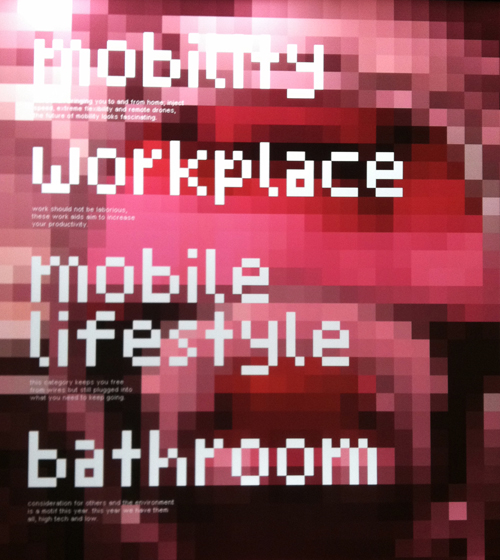
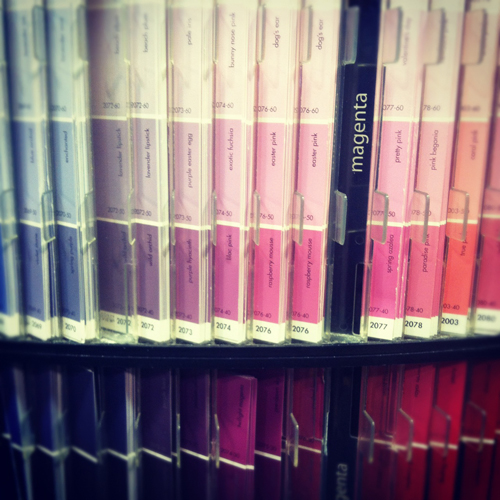
Here we have a pixelated display at the Red Dot Design Museum in Singapore. A blurry screen becomes textured art and the type conjures up early 90’s atari. If you follow our line of thinking and view Benjamin Moore’s paint chips immediately after, it’s easy to make a connection- they’re strikingly similar, but hold opposing conversations (and purposes).

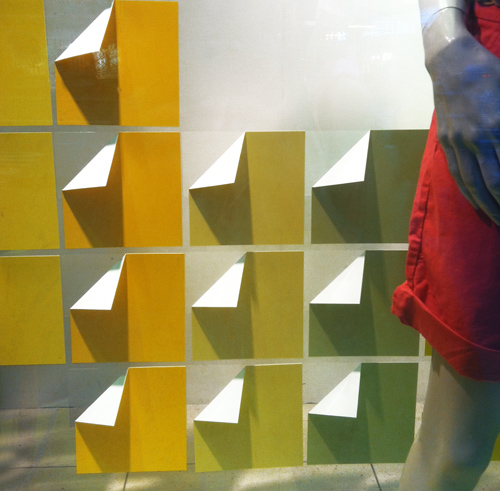
Now let’s move to the commercial realm. This is window display from the GAP on Fifth Avenue. It’s extremely economical- paper’s been folded and arranged in a grid. The gradient is the storyline and compliments the clothing.

Moving along to packaging, this method was recently the result of Sephora’s beauty collaboration with Pantone Universe. Pixels are again the focus. Mimicking the diversity within skin tones, the packaging amplifies the face and focuses on color, making us wonder if CMYK really wishes it were RGB.


DIY: How to Make a Bike Lock Sock


Big treat today! Our good friend (ex-New Yorker/chic Parisian/vegetarian sandwich-maker), Tiffany Iung of  t i f a m a d e, has offered her crafty skills on cycling culture. Today she’s making a Lock Sock. 

Materials Needed:

Impermeable cotton | Fabric paint (I used Folk Art by Plaid) | Paint brush | Masking tape (I recommend finding a thin width tape) | 2 strips of leather | Pins | Sewing machine

Step 1: I bought a cheap impermeable cotton at the fabric store. I chose a dark color since I knew the cover would be in some dirty places. I have this Kryptonite lock, so I cut my fabric to measure 115 cm long by 10 cm wide. I made this “pattern” based on the manufacturer’s nylon cover I cut off the chain, but you could do the same with any size cover. I taped off a simple graphic pattern using masking tape, and taped the fabric down to my work surface.

Step 2: I painted the fabric with Folk Art by Plaid brand fabric paint. I had to apply a couple layers of paint to get the opacity I was happy with. Once painted, the paint must dry for 24 hours, and then the painted fabric must be ironed. I used Metallic Solid Bronze and Orchid.

Step 3: The most difficult (and it wasn’t even that hard) part of the whole process is sewing the leather. Just be sure your sewing machine’s needle can make it through a few layers of leather. Then sew a straight seam all the along the length of the fabric.

Step 4: This part’s super simple- just pin the side seam and sew.

Step 5: I finished the seam with a zig-zag stitch for reinforcement. I also hand-stitched the leather to make sure that it stays together.

Step 6: Once all your sewing is done, you can turn the tube right-side out and be so proud of the cool thing you just made. You just have to slide the chain into the tube, et voilà! Super chic new cover for your chain.

Coverage by Tiffany Iung


Tracking Repetitive + Awesome.
On Instagram.