Pattern Pulp

Book Review: folding techniques for designers


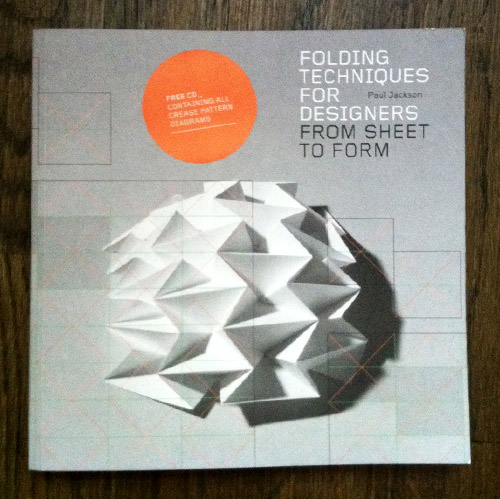
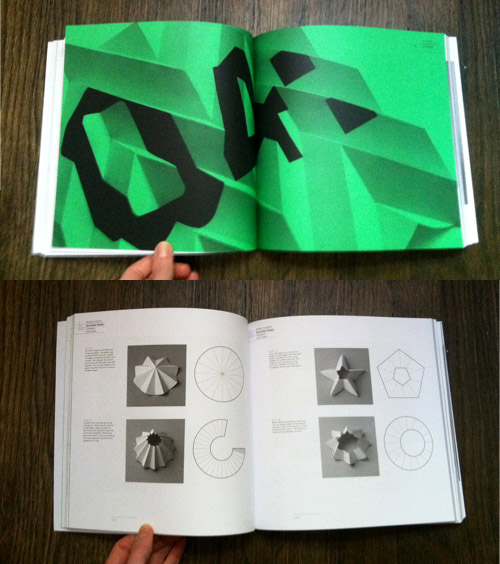
Many designers incorporate folding into their design repertoire to breathe life to two-dimensional materials. Folding Techniques for Designers explains the key techniques of folding, such as pleated surfaces, curved folding and crumpling. An elegant, practical handbook, it covers over 70 techniques explained by clear step-by-step drawings, crease pattern drawings, and specially commissioned photography.

Author Paul Jackson has been a professional paper folder and paper artist since 1982 and has created 30 books on paper arts and crafts in addition to teaching more than 150 university-level design courses. It’s a testament to his skill as a teacher that his tutorials and directions are clear and easy to follow as his directions guide readers from the basics through advanced techniques. For a taste of his teaching style, check out these videos of introductory techniques.


Texture for your floors & walls


Milan is where collections are launched. Beyond fashion, furniture week is the jewel of the year- where the world watches as global designers put their best foot forward. Today we’re showing a few wall and floor favorites. Creating decorative porcelain tiles for Bardelli reminiscent of Persian rugs, Marcel Wanders proves ornate detailing can have understated beauty. They are available in 5 patterns and 8 colors, and are silkscreen printed on a matte background.

These 3D wall tiles are part of Lenny Kravitz’ firm, Kravitz Design Inc., for LEA. Playing with concave and convex shapes, the sculptural tiles come in a glazed glossy or matte finish in black or white that generate movement within a space.

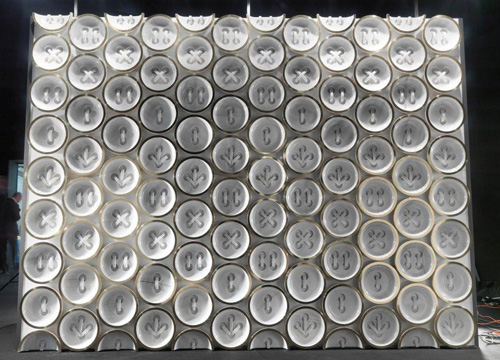
These Laviani installations are breathtaking. This white and gold button-like wall looks like a wondrous window display.

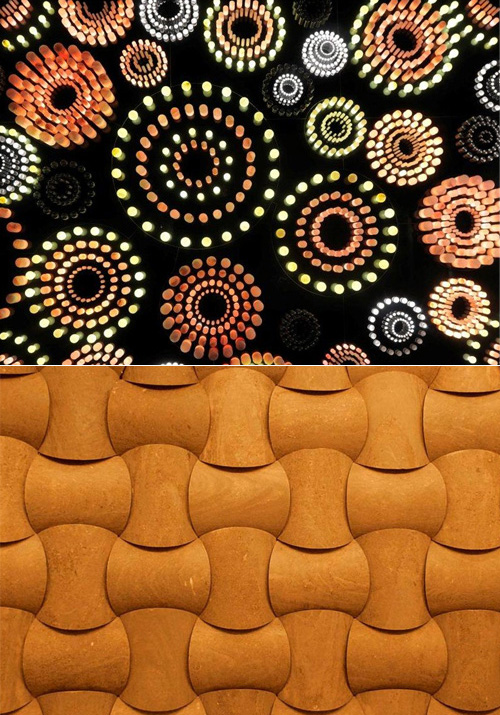
Also a part of the Stand Citco Laviani collection, we have illuminated spirographs and woven wood parts.


Trend: Translucent Plaids


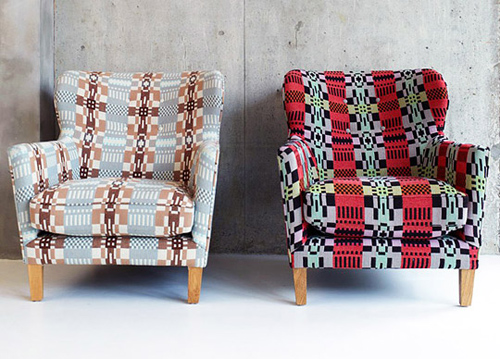
I’ve been into translucent plaids lately and when I stumbled upon Vittorio J’s Benson variety, I was drawn to the versatility of the pattern.

We’ve seen versions of this in home from Donna Wilson with the Eadie Welsh Blanket Armchair

and in Women’s fashion from Ace&Jig. Which color combination’s your favorite?


Caitlin Keegan


Designer and illustrator Caitlin Keegan’s work has the ability to convey a message with a decidedly fun and whimsical vibe. Schooled at the Rhode Island School of Design, Caitlin has gone on to illustrate for clients such as Bust, Chronicle Books, The New York Times, Nylon and Playgirl. She has served as a staff design at Nickelodeon Magazine, and also designed for Scholastic and Sesame Workshop. Strongly influenced by her love of pattern, collage, and decorative arts, her beautifully striking work has been exhibited across the U.S. and has been recognized twice by American Illustration. In addition to those feats, Caitlin has illustrated two books so far, Shakespeare’s Love Sonnets and Chicken and Egg: A Memoir of Suburban Homesteading with 125 Recipes and has had her work included in a growing list of publications including The Exquisite Book: 100 Artists Play a Collaborative Game, Save the Date, The Sourcebook of Contemporary Illustration, 1,000 Handmade Greetings: Creative Cards and Clever Correspondence and Pattern Design: Applications and Variations.

DIY: How to Make a Bike Lock Sock


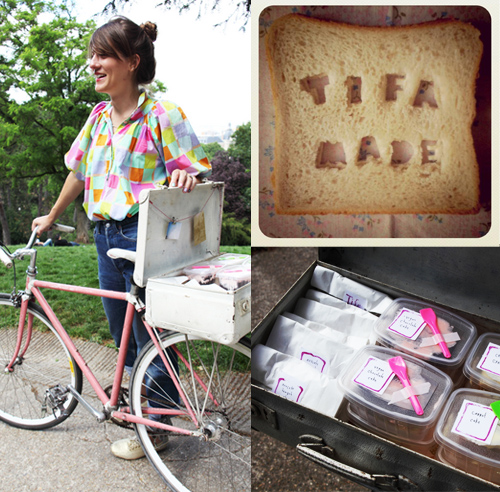
Big treat today! Our good friend (ex-New Yorker/chic Parisian/vegetarian sandwich-maker), Tiffany Iung of  t i f a m a d e, has offered her crafty skills on cycling culture. Today she’s making a Lock Sock. 

Materials Needed:

Impermeable cotton | Fabric paint (I used Folk Art by Plaid) | Paint brush | Masking tape (I recommend finding a thin width tape) | 2 strips of leather | Pins | Sewing machine

Step 1: I bought a cheap impermeable cotton at the fabric store. I chose a dark color since I knew the cover would be in some dirty places. I have this Kryptonite lock, so I cut my fabric to measure 115 cm long by 10 cm wide. I made this “pattern” based on the manufacturer’s nylon cover I cut off the chain, but you could do the same with any size cover. I taped off a simple graphic pattern using masking tape, and taped the fabric down to my work surface.

Step 2: I painted the fabric with Folk Art by Plaid brand fabric paint. I had to apply a couple layers of paint to get the opacity I was happy with. Once painted, the paint must dry for 24 hours, and then the painted fabric must be ironed. I used Metallic Solid Bronze and Orchid.

Step 3: The most difficult (and it wasn’t even that hard) part of the whole process is sewing the leather. Just be sure your sewing machine’s needle can make it through a few layers of leather. Then sew a straight seam all the along the length of the fabric.

Step 4: This part’s super simple- just pin the side seam and sew.

Step 5: I finished the seam with a zig-zag stitch for reinforcement. I also hand-stitched the leather to make sure that it stays together.

Step 6: Once all your sewing is done, you can turn the tube right-side out and be so proud of the cool thing you just made. You just have to slide the chain into the tube, et voilà! Super chic new cover for your chain.

Coverage by Tiffany Iung

 

Meet the Newest Contributor!


Fun announcement today! Meet Tiffany Iung- the sweetest soul who left New York for Paris living. We met last year when mutual friends connected mutual friends, (you know how that goes) and Ms. Iung showed us what nightlife in the 8th district is like. Surprise surprise, we found ourselves talking shop amidst the dancing, Monsieura markings and 2am drinks…and a year and a half later I present our DIY collaboration.

Always with her hands in a creative pot, Tiffany’s been running her own vegitarian catering business since arriving in Paris – an impressive (and adorable) feat – as she often sells from a trunk on her pink bike. Her column will cover DIY in relation to daily life and will have a Parisian spin (by way of osmosis). Enjoy!

Photos by Francois Coquerel.


Tracking Repetitive + Awesome.
On Instagram.